
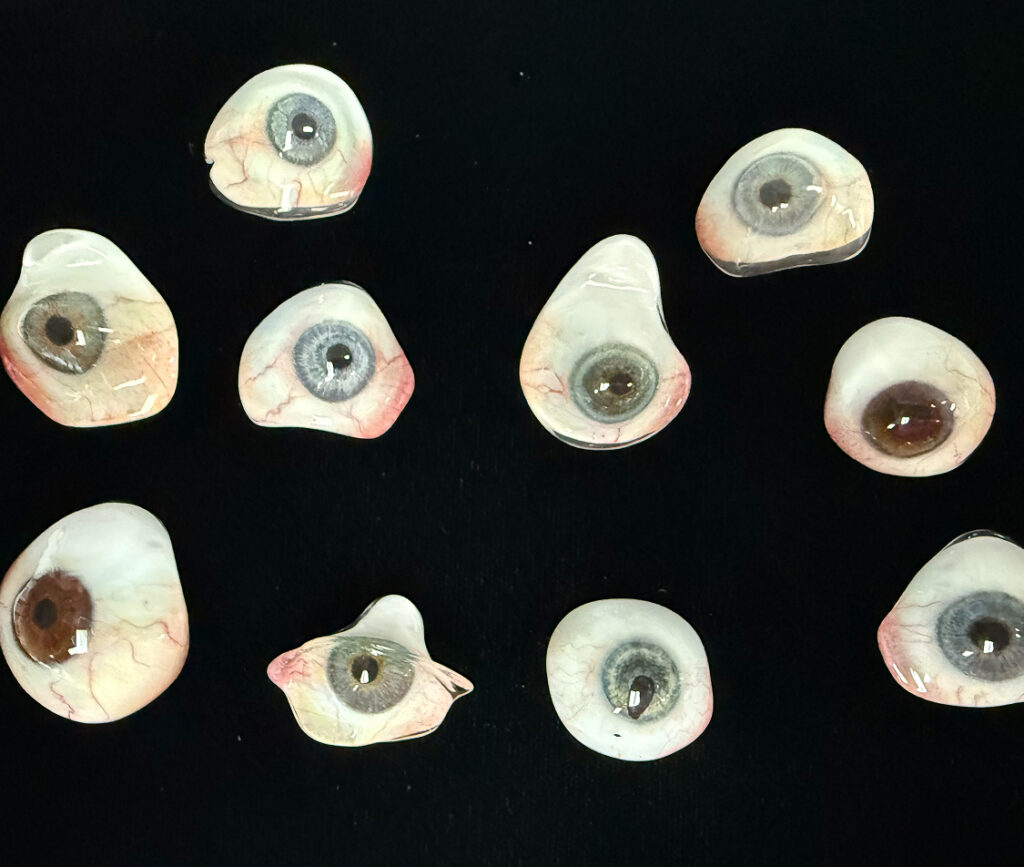
A prosthetic eye lasts about five years on average for adults before it should be replaced, and roughly two to three years for children, whose sockets are still growing. The eye does not simply wear out on a fixed date; it needs replacing when the fit changes, the surface wears, or it becomes uncomfortable. Regular…
Do Prosthetic Eyes Move?

Yes, prosthetic eyes can move. Movement comes from an orbital implant placed during surgery, which attaches to your eye muscles and transfers their motion to the artificial eye worn over it. A prosthetic eye does not move as fully or as fast as a natural eye, but a well-placed implant and a close custom fit…
Custom vs Stock Prosthetic Eyes: What’s the Difference?
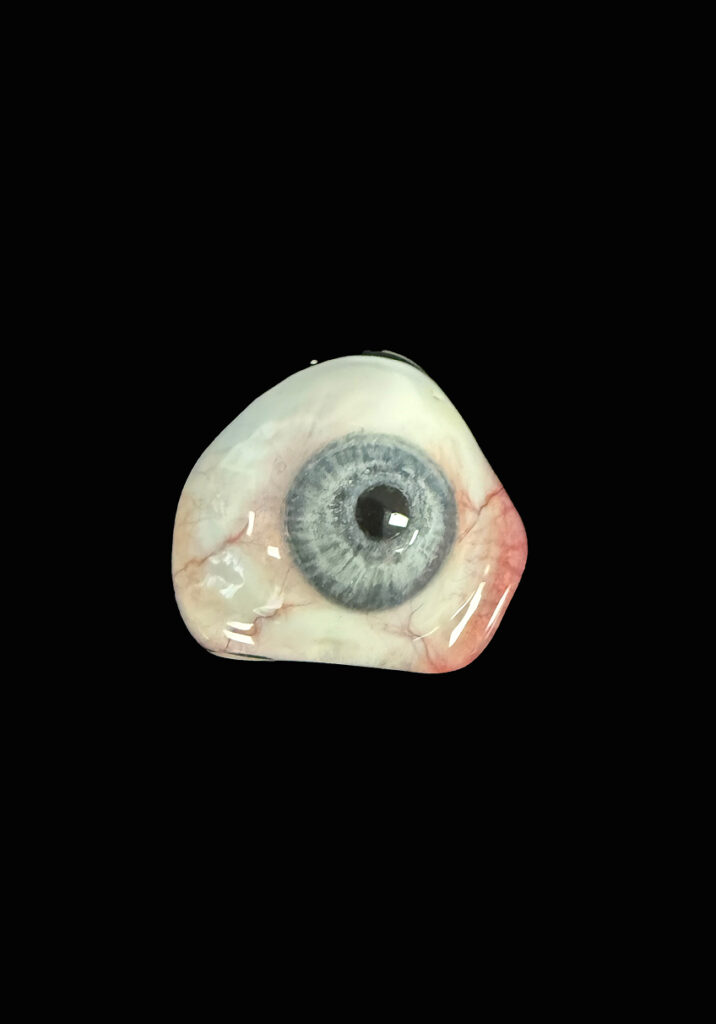
A custom prosthetic eye is made from an impression of your own socket and hand-painted to match your natural eye, while a stock prosthetic eye is a mass-produced shape chosen from a set mold. It can be modified somewhat. The core difference is fit: a custom eye conforms exactly to your anatomy, and a stock….
Can a Prosthetic Eye Help You See Again?
A prosthetic eye does not restore vision. It is a custom artificial eye that replaces the appearance of a lost eye, restoring facial symmetry, protecting the socket, and helping you feel like yourself again, but it does not provide sight. Experimental “bionic eye” devices exist for certain retinal diseases, but they are a completely different…
What is an Ocularist?

Have you ever wondered how people who lose an eye get an ocular prosthesis that looks so real? The answer is through a special type of artist called an ocularist. Ocularists mix science with art to help people in ways that truly normalize lives. Let’s dive into what an ocularist is, what they do, and…